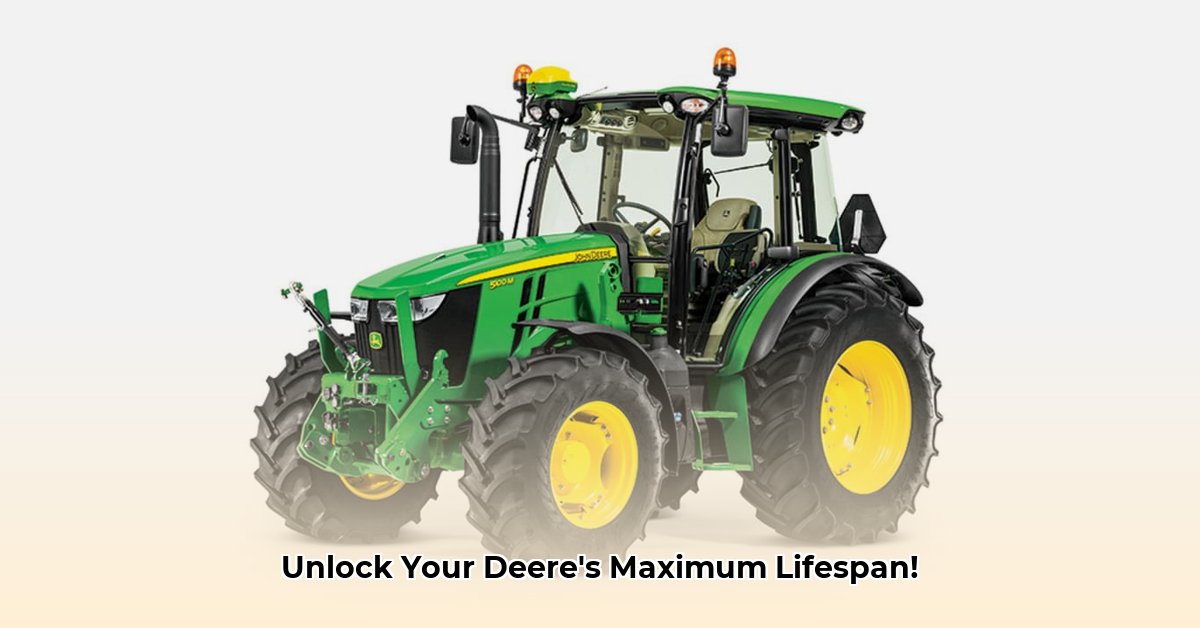
Understanding Tractor Longevity: It's More Than Just Hours
So, you're wondering, "How long will my John Deere tractor last?" It's a crucial question for any farmer, impacting both productivity and profitability. The simple answer isn't a magic number. A well-maintained John Deere might easily surpass 10,000 hours, while a neglected one could fail far sooner. This guide will provide actionable steps to maximize your tractor's lifespan. For the best deals on John Deere tractors, check out these great offers.
Factors Influencing Tractor Lifespan
Engine hours provide a general indication, but they're only part of the story. Several key factors significantly impact a tractor's longevity:
Maintenance: Regular maintenance, including oil changes, filter replacements, and fluid checks, is paramount. Neglecting these crucial steps accelerates wear and tear. Think of it as preventative medicine for your valuable equipment. A well-maintained tractor with 10,000 hours might be in better shape than a poorly maintained one with only 5,000.
Usage Intensity and Terrain: Heavy-duty tasks on rough terrain (rocky fields, steep slopes) place significantly more stress on the tractor than lighter work on flat land. Consistent, intense operation shortens lifespan more than occasional use.
Model Variations: Even within the John Deere line, different models have different expected lifespans. A smaller utility tractor might typically last for around 8,000 hours, while a larger, heavy-duty model could potentially reach 15,000 hours or more. However, proper maintenance remains the cornerstone of longevity for all models.
Don't you want to know how many tasks the machine can handle before requiring repairs?
Practical Steps to Extend Your John Deere's Life
This section provides a detailed, actionable plan to maximize your tractor's operational life:
Develop a Comprehensive Maintenance Schedule: Begin with John Deere's recommended schedule, 1, but tailor it to your specific usage patterns and operating conditions. For example, a tractor used intensively for plowing rocky fields will require more frequent maintenance than one used primarily for light mowing on flat land. Maintain meticulous records of every service, noting date, work performed, and technician. This record-keeping is invaluable for tracking maintenance and identifying potential issues.
Master Early Problem Detection: Regularly inspect your tractor for unusual noises, leaks, changes in performance, or any other abnormalities. Address any issues promptly; a small problem ignored can quickly escalate into a major, costly repair. Proactive attention to such red flags is key!
Match the Tractor to the Task: Avoid overloading your tractor; use the right machine for the job. Avoid extreme stresses on the machine by assigning tasks appropriate to its capabilities. Overloading can dramatically shorten its life. Proper equipment matching is key!
Budget for Repairs and Overhauls: Factor in the cost of routine maintenance and potential major repairs. While these expenses might seem less exciting, they prove to be an investment that safeguards your tractor's longevity, preventing unforeseen and potentially crippling financial difficulties. Planning for these expenses demonstrates a responsible approach to equipment ownership contributing to longevity.
Prioritize Proper Storage: Store your tractor in a dry, sheltered environment to protect it from rust, corrosion, and other environmental damage. This seemingly simple step plays a significant role in preserving the long-term integrity and structural soundness of your machine. Proper storage protects against rust and premature deterioration.
Real-World Examples: The Impact of Maintenance
Online tractor forums often showcase the remarkable longevity of well-maintained tractors. Many users report exceeding 10,000 hours due to diligent maintenance. These real-world examples underscore the point that a proactive approach to maintenance significantly extends the life of your equipment regardless of the model. These success stories highlight the importance of proactive maintenance.
Conclusion: Long-Term Investment, Long-Term Returns
Your John Deere tractor represents a considerable investment. Proactive maintenance is not merely an expense; it's a strategic investment in your farm's future. Extending your equipment's lifespan directly translates into increased productivity, reduced replacement costs, and improved profitability. Proper upkeep shows a commitment to responsible ownership and secures the lasting value of this substantial capital investment. Investing in the upkeep of your equipment ultimately ensures a healthy bottom line for years to come.